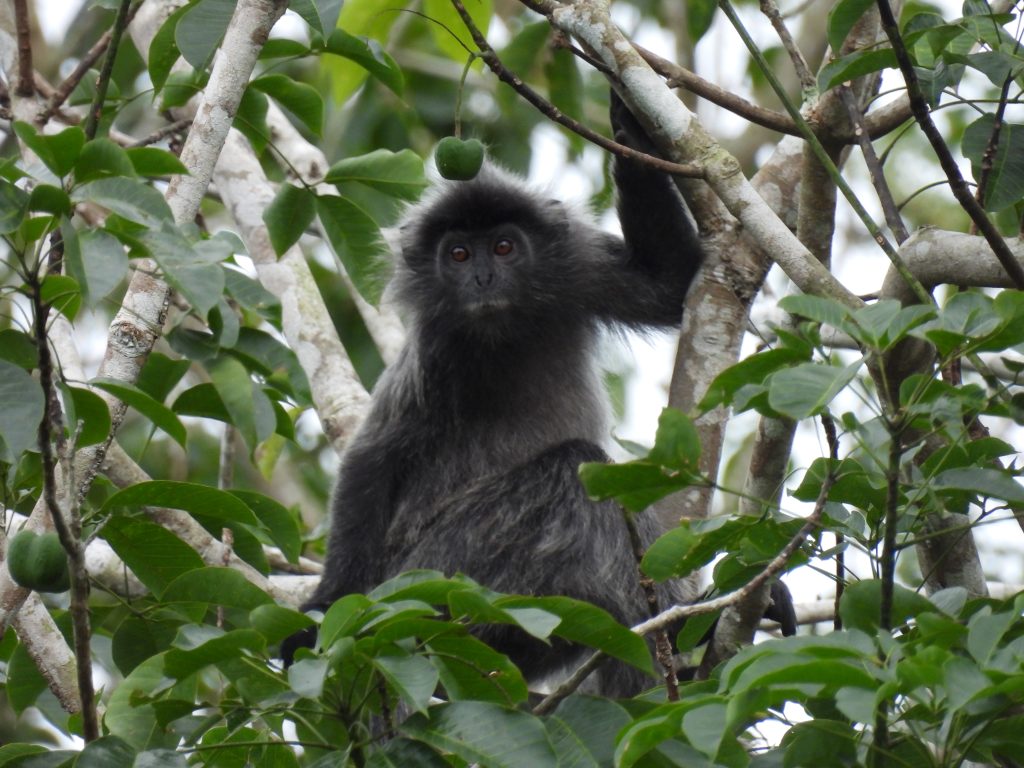
Lutung Silver (Trachypithecus cristatus)
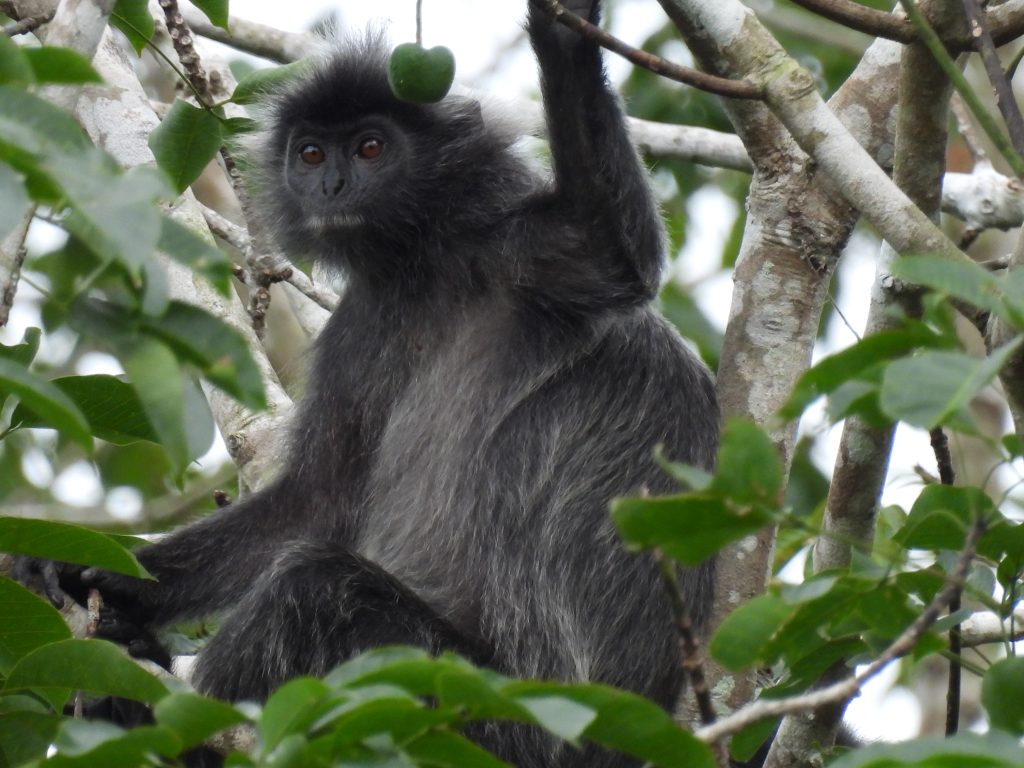
Silver Langur (Trachypithecus cristatus) or also known as the silver leaf monkey is a primate from the Cercopithecidae family. Silvery Lutung are found in various Southeast Asian countries (Malay Peninsula, Kalimantan, Sumatra, Java, Thailand and the Natuna Islands).
The fur color of the Silver Langur is dark grey, the tips of the hair are light gray which gives an overall silvery effect. The underside of the tail and crotch are yellowish. The face is black and the black hair on the top of the head points upwards. There are slight variations in hair color, including brown, brownish gray, or black. Male Silver Langurs have an average weight of 6.6 kg and female Silver Langurs have an average weight of 5.7 kg. The body length of males ranges from 52.4-56 cm, while the body length of females ranges from 46.5-49.6 cm. Silver
langurs have tails that are sometimes longer than their bodies.
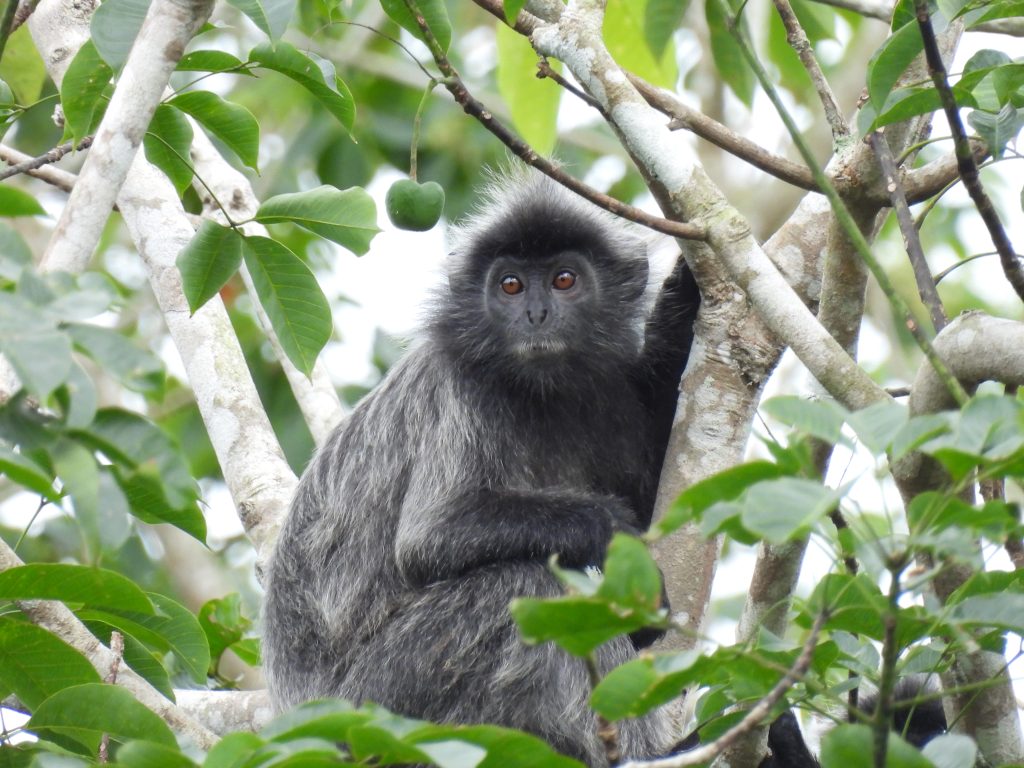
The silver Langur is a species that eats leaves, undergrowth and vines. They also consume a variety of fruits, seeds, and flowers. They prefer to eat immature leaves because immature leaves contain less lignin and tannin which can interfere with their digestion.
Silver Langur Mostly lead an arboreal lifestyle in trees. They are also diurnal, meaning that most of their activities are carried out during the day until sunset. They sometimes come down to the ground but only to move from one place to another. Silver langurs are shy animals. When they feel threatened, they will return to the trees.
The distribution area or habitat of silver langurs is tropical rainforests, mangrove forests, and forests around beaches and rivers. The existence of the mangrove ecosystem is very strategic, because it is one of the important ecosystems in coastal and marine areas which functions as a habitat for various types of organisms including the Silver Langur. Mangrove ecosystems are considered forests that are less threatened when compared to highland or lowland forests, so they are said to be productive ecosystems, namely providing ecological services (Winata & Rusdiyanto, 2015).